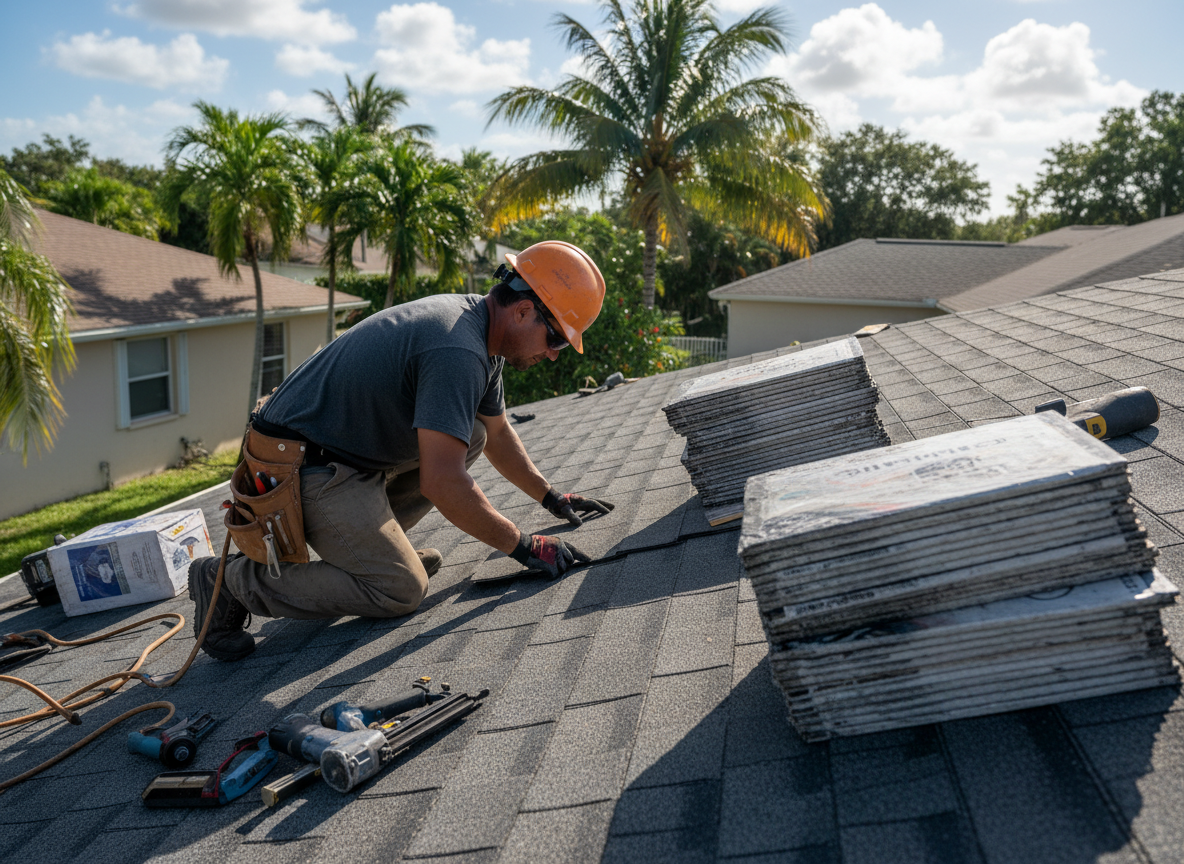
Asphalt shingles remain the most common roofing choice across Cutler Bay neighborhoods because they balance cost and performance when installed to Miami-Dade County high-velocity hurricane zone standards. Architectural shingles rated for 130 mph or greater uplift perform best against the combination of intense summer sun, salt-laden air from the nearby coast, and sudden downpours during the June-to-November rainy season. Proper synthetic underlayment and sealed nail penetrations become critical on the many 1970s and 1980s ranch homes where original decks have aged and may show decking movement during storms.
Edge cases frequently encountered include blistering caused by trapped moisture from poor attic ventilation and granule loss accelerated by heat reflection off nearby concrete driveways. Florida Building Code requires specific fastening patterns and drip-edge installation that many older roofs lack; skipping these details leads to insurance claim denials after tropical storms. Homeowners should also watch for algae streaks that signal chronic moisture retention, especially on north-facing slopes shaded by mature landscaping common in Cutler Bay subdivisions.
Before any work begins, a thorough deck inspection is essential because termite damage and previous patch repairs often hide beneath the existing shingles. Replacement timing should account for the fact that most Cutler Bay homes were built with 20- to 25-year shingles that now face repeated hurricane seasons, shortening actual service life. Matching shingle profiles and colors during partial repairs preserves curb appeal on streets where uniform roof appearance affects neighborhood character.
Ventilation upgrades paired with new shingles prevent the rapid deterioration seen when ridge vents are omitted on low-slope roofs typical of the area. Homeowners who delay addressing minor flashing failures around chimneys and skylights often face full deck replacement once water reaches the plywood, a repair that escalates costs quickly in South Florida's moisture-heavy environment.
Technician insight
In Cutler Bay, the thing that catches most people out with Asphalt shingle roofing is how quickly poor attic ventilation on 1970s and 1980s ranch homes turns new shingles brittle because the high humidity never escapes, especially on streets with mature tree cover blocking airflow.
Leak Repair After Heavy Rains
A Cutler Bay homeowner reported water stains in the living room ceiling following a summer storm. Inspection revealed failed step flashing around a bathroom vent on a 22-year-old shingle roof. We replaced the flashing, sealed adjacent shingles, and added ridge ventilation to reduce future moisture buildup.
How it works
- 1
On-Site Assessment
Inspect decking, flashing, ventilation, and current shingle condition on site in Cutler Bay.
- 2
Material Selection
Choose wind-rated architectural shingles and underlayment matched to Miami-Dade code and home exposure.
- 3
Tear-Off and Preparation
Remove old layers, repair decking, and install drip edge and synthetic underlayment.
- 4
Installation and Final Check
Apply new shingles with proper nailing pattern, seal all penetrations, and verify ventilation.
Pricing
Upfront quotes provided after inspection; price depends on roof size, pitch, existing deck condition, and whether ventilation upgrades are required.