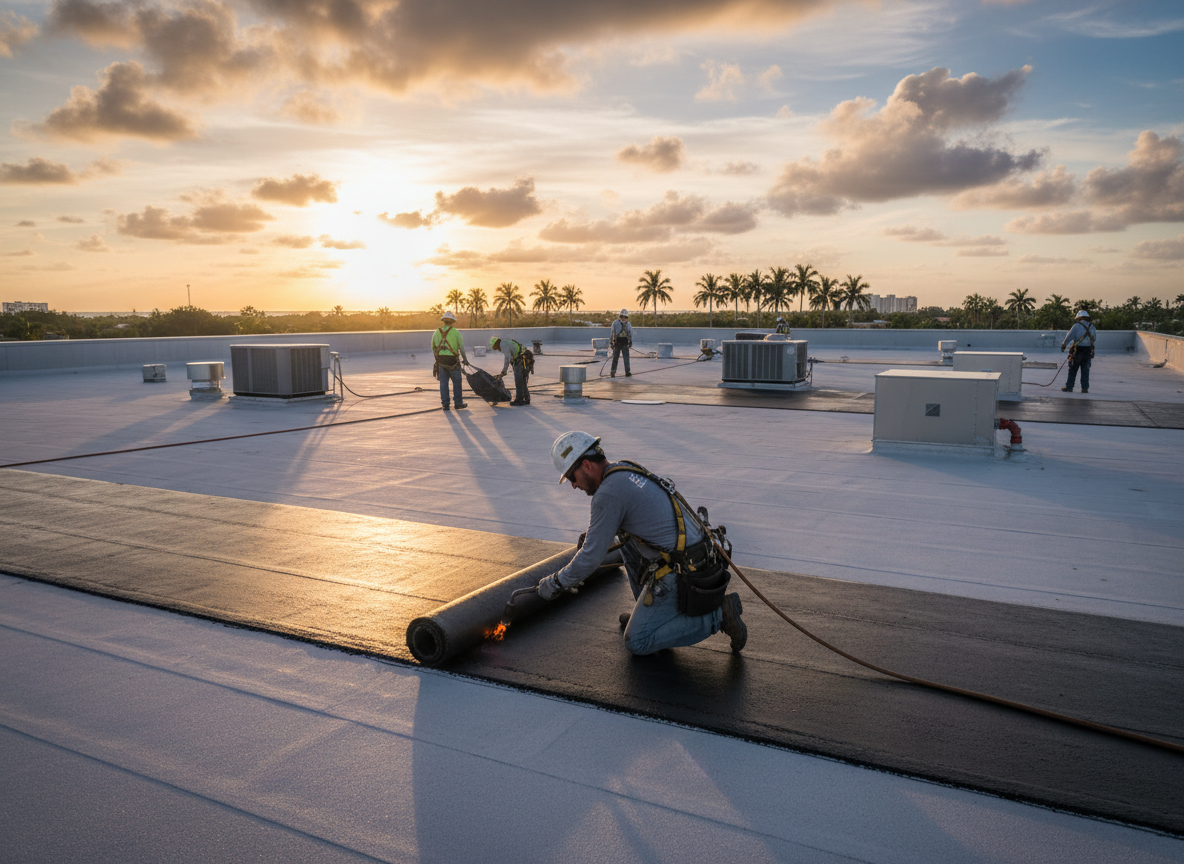
Industrial buildings in Cutler Bay often feature large flat or low-slope roofs on warehouses and light manufacturing sites along South Dixie Highway. These roofs face constant UV exposure, standing water after summer storms, and wind uplift pressures that Miami-Dade County requires to meet high-velocity hurricane zone standards. Choosing the right membrane or metal panel system means accounting for thermal expansion on long spans and ensuring proper drainage to avoid ponding that accelerates deterioration.
Edge details around HVAC curbs, skylights, and parapets demand extra attention because wind-driven rain commonly finds gaps in older flashing. Contractors working here routinely reinforce seams with additional fasteners and compatible sealants rated for the local environment. Skipping these steps leads to leaks that travel far inside the building before surfacing, complicating repairs on occupied industrial spaces.
Access on these sites is frequently limited by equipment yards, loading docks, and fencing, so crews plan lifts and staging around active operations. Material choices such as reinforced TPO or EPDM must resist both chemical exposure from nearby businesses and the salt-laden air that reaches inland from the coast. Regular inspections after each rainy season catch fastener back-out and seam separation early.
Storm Preparation
Industrial roofs in Cutler Bay benefit from pre-season checks of perimeter edge metal and tie-in points to neighboring structures. These details often fail first during tropical storms moving through Miami-Dade County.
Technician insight
In Cutler Bay, the thing that catches most people out with industrial roofing contractors is how older warehouse roofs along South Dixie Highway lose seam integrity after repeated ponding from summer rains combined with the county's strict wind-uplift rules.
Warehouse Roof After Heavy Rains
A distribution facility near Cutler Bay reported interior leaks following multiple downpours. Inspection showed failed flashing around roof drains and HVAC curbs on a 15-year-old modified bitumen system. Crews replaced the perimeter details and added tapered insulation for better drainage. The building stayed dry through the next storm season.
How it works
- 1
Site Assessment
Walk the roof and inspect all penetrations, drainage, and existing membrane condition while noting wind exposure on the Cutler Bay site.
- 2
Material Selection
Match membrane or panel type to building use, slope, and Miami-Dade wind-load requirements for the specific industrial structure.
- 3
Installation
Install with proper fastening patterns, sealed seams, and reinforced flashings suited to local rain and wind patterns.
- 4
Final Inspection
Check drainage, edge securement, and all tie-ins before turnover, confirming compliance with county standards.
Pricing
Costs depend on roof size, existing condition, chosen system, and access limitations typical of Cutler Bay industrial properties.