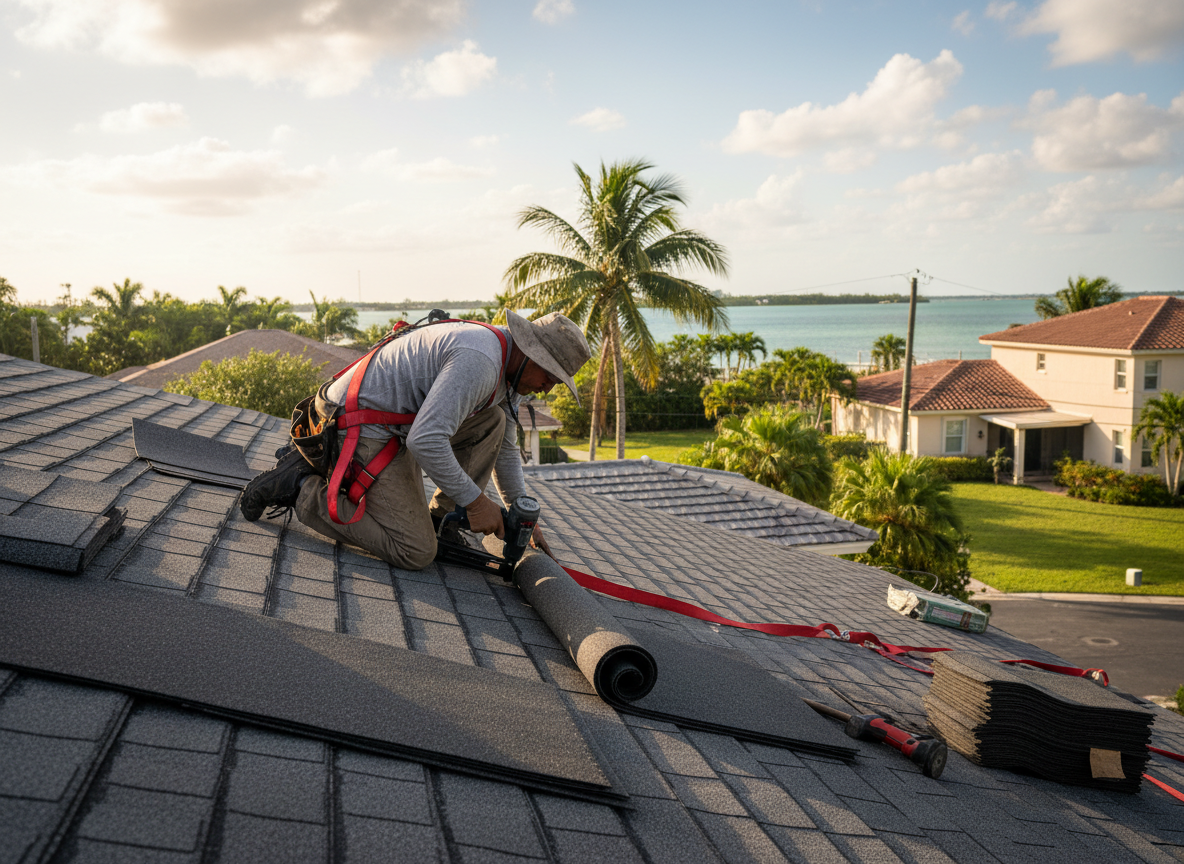
Roof covering work in Cutler Bay centers on selecting materials that survive constant salt air exposure and sudden wind loads from tropical storms. Concrete tile remains common on 1980s and 1990s homes throughout Cutler Ridge and Saga Bay neighborhoods, yet the underlayment often fails first when moisture penetrates the joints. Metal panels or synthetic slate can be substituted where code requires higher uplift ratings, but each option changes the fastening pattern and ridge ventilation details that Miami-Dade inspectors check. Homeowners frequently overlook how the flat terrain near Old Cutler Road allows standing water to collect at valleys during summer downpours, accelerating corrosion on exposed fasteners.
Edge cases appear regularly on two-story homes along US 1 where roof decks slope into second-floor additions added decades later. These transitions demand extra step flashing and ice-and-water shield extended past the drip edge, something not always present in original construction. Florida Building Code updates after Hurricane Andrew still dictate specific nail schedules and clip spacing that vary by wind zone, so skipping a single row of clips can void the entire assembly. Crews also watch for rotted plywood sheathing caused by repeated condensation under dark-colored tiles, a condition that shows up more often on south-facing slopes in the summer.
Before any new covering goes down, the deck must be inspected for delamination and the existing felt removed completely so the new membrane bonds directly. In areas near the canal systems east of Franjo Road, higher humidity levels mean crews allow extra drying time between layers to prevent blistering. Proper ridge vent installation also matters because sealed attics trap moisture that later migrates back into the covering and causes granule loss on asphalt shingles or cracking on tiles.
Technician insight
In Cutler Bay the thing that catches most people out with roof covering is how quickly salt air eats through standard galvanized nails on older tile roofs along the canals; once the underlayment starts letting water through, the deck softens in less than two seasons and the whole job turns into a tear-off instead of a simple recover.
Tile Recover Turned Deck Repair
Homeowner near Franjo Road called after noticing granules in the gutters. Inspection showed failed felt under the original concrete tiles and soft plywood along the south slope. We removed the tiles, replaced the compromised decking, installed new self-adhered underlayment and re-covered with the same profile tile using upgraded clips. The roof now meets current wind load requirements without changing the home's appearance.
How it works
- 1
Initial Deck Assessment
Inspect sheathing, rafters and existing flashing for rot or delamination common in Cutler Bay's humid climate.
- 2
Material Selection And Code Check
Match wind-rated covering to Miami-Dade requirements and note any neighborhood HOA restrictions on tile color or profile.
- 3
Underlayment And Flashing Upgrade
Install self-adhered membrane at valleys, eaves and penetrations, then add step flashing around chimneys and skylights.
- 4
Covering Installation And Ventilation
Fasten new covering per current code schedules and integrate ridge venting sized for the home's attic volume.
- 5
Final Walk And Leak Test
Check every seam, clean debris from gutters, and confirm no water intrusion points remain before leaving the site.
Pricing
Upfront quotes after deck inspection; final price depends on material choice, roof pitch and any deck repairs required.