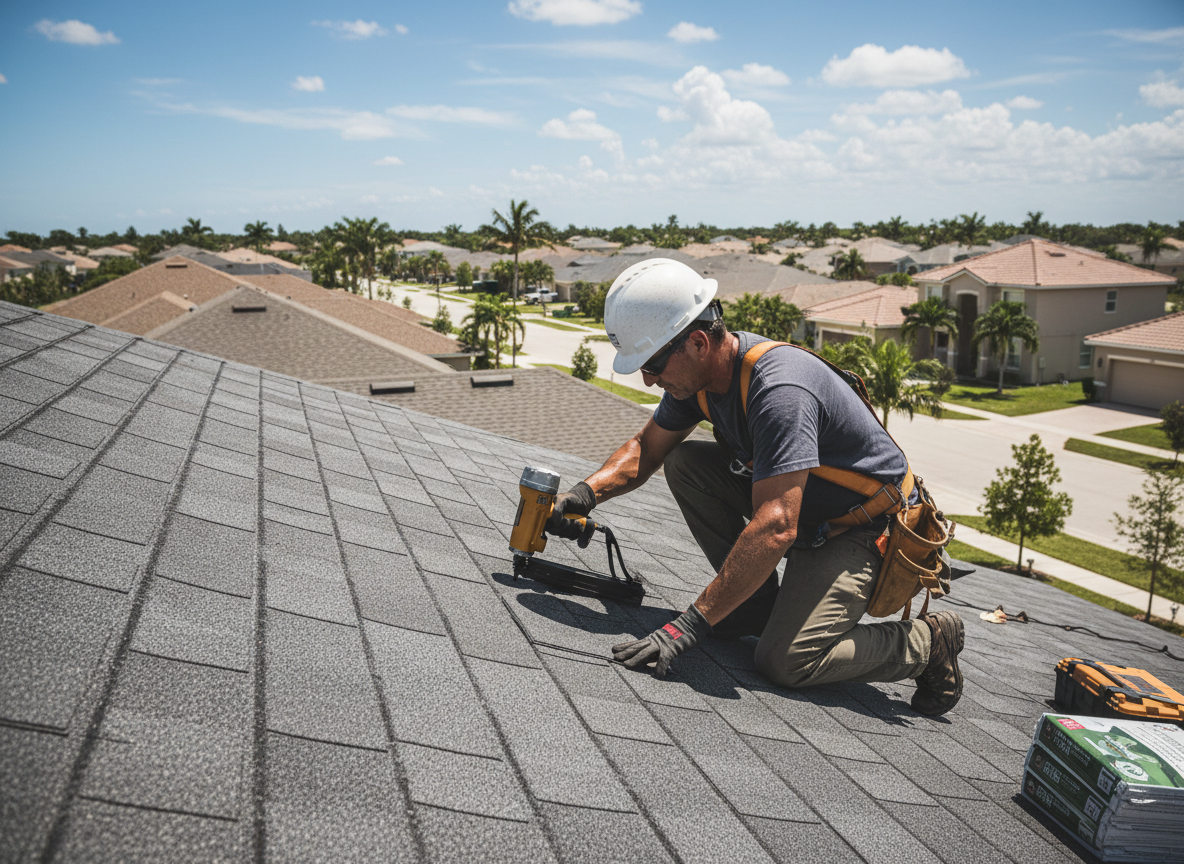
Cutler Bay homes built from the 1970s through the 1990s often carry original concrete tile or asphalt shingle systems that have reached the end of their service life. Roofing installers here must account for Miami-Dade County wind-borne debris requirements and the constant salt-laden air that speeds corrosion on flashing and fasteners. Proper underlayment selection and ridge ventilation become critical because summer humidity traps moisture under the deck if airflow is restricted.
Installation crews routinely deal with older plywood decks that have delaminated from repeated hurricane-season leaks. Roofing installers check for rotted rafters around plumbing vents and skylights before new material goes down, because a single missed soft spot can void the entire roof warranty later. High-wind clips and elevated hurricane ties are standard on every job because straight-line winds off the Everglades can exceed 100 mph even outside named storms.
Homeowners in the Cutler Ridge and Whispering Pines neighborhoods frequently request full tear-offs rather than overlays because the existing layers trap heat and accelerate shingle granule loss. Roofing installers also pay close attention to valley flashing where two roof planes meet, since heavy afternoon thunderstorms send water down those seams faster than standard step flashing can handle. Matching existing barrel-tile profiles on adjacent homes keeps HOA approvals moving without delays.
Technician insight
In Cutler Bay the thing that catches most people out with roofing installers is how quickly salt air from the bay corrodes the original metal drip edge on 1980s homes; if you do not replace that edge during the install, the new roof starts leaking at the fascia within two seasons even when the shingles are perfect.
Tile Roof Replacement After Deck Rot
A home in the Cutler Ridge neighborhood showed recurring leaks around the kitchen vent. We found the original plywood had softened under two layers of tile. After removing everything down to the rafters we replaced the damaged sections, added new hurricane clips, and reinstalled matching barrel tiles with upgraded underlayment. The leaks stopped and the attic temperature dropped noticeably once proper ventilation was restored.
How it works
- 1
Site Assessment
Measure the roof, note deck condition, and identify any prior leak locations around vents and valleys.
- 2
Material Selection
Choose impact-rated underlayment and fasteners suited to Cutler Bay salt exposure and wind zones.
- 3
Deck Preparation
Remove old layers, replace damaged plywood, and install new drip edge and ice-and-water shield at eaves.
- 4
Installation
Lay new underlayment, install tiles or shingles with proper nailing patterns, and seal all penetrations.
- 5
Final Inspection
Check ridge vents, flashing, and perimeter edges before cleanup and walkthrough with the homeowner.
Pricing
Pricing varies with roof pitch, existing layer count, and whether deck repairs are required; quotes are provided after an on-site visit.