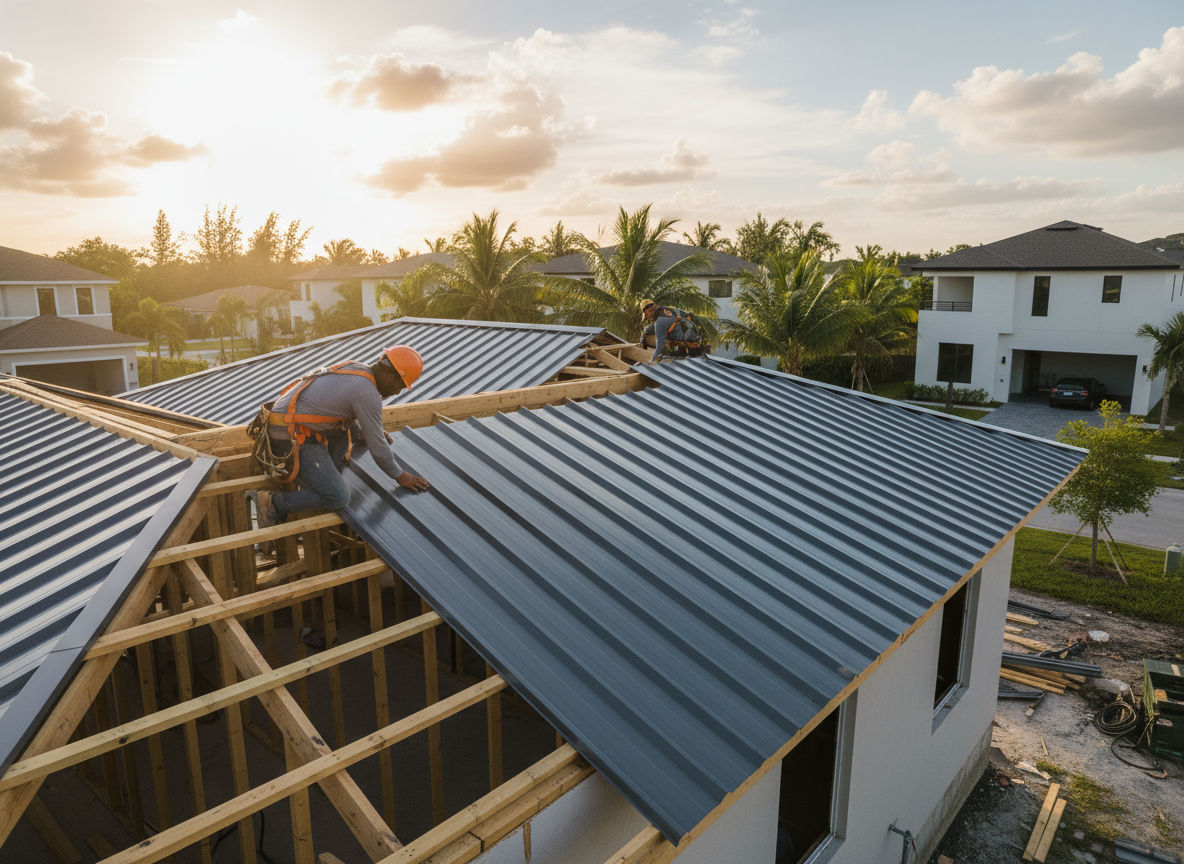
Steel roofing holds up well in Cutler Bay because it resists the high winds that sweep through Miami-Dade County during hurricane season. Panels must be fastened with hurricane clips and sealed at every seam to keep water out when heavy rain hits the flat to low-pitch roofs common on homes built from the 1960s onward along streets like SW 184th and 211th. Without the right underlayment and ventilation, trapped moisture from the area's humidity leads to rust streaks that show up first at the eaves.
Homeowners often call when existing metal begins to corrode near the coast or when tree limbs from summer storms puncture panels. We check the existing decking for rot caused by years of leaf buildup and poor drainage typical in this flat terrain. New steel goes on only after the structure is confirmed sound, because older Cutler Bay homes near S Dixie Hwy frequently have rafters spaced wider than current code allows for 26-gauge material.
Wind Load and Fastening Details
Steel panels in Miami-Dade require specific screw patterns and butyl tape at laps to meet the county's high-velocity hurricane zone rules. Skipping the tape or using the wrong fastener spacing is the most common shortcut that fails inspection.
Corrosion Protection Steps
We apply zinc or aluminum-zinc coatings plus a baked-on paint system rated for marine exposure. This extra layer matters because salt carried on afternoon sea breezes accelerates edge rust on uncoated steel within a few seasons.
Technician insight
In Cutler Bay, the thing that catches most people out with steel roofing contractors is condensation dripping from the underside of the panels when homes lack proper ridge ventilation. The flat terrain and frequent afternoon showers keep humidity high, so we always add vented closures and check soffit intake before the job is done.
Corroded Steel Panels on SW 200th Street Home
Homeowner noticed rust along the front eave after two rainy seasons. We found the original 29-gauge panels installed without marine coating and with blocked soffits. Replaced the affected section with 26-gauge AZ-50 coated steel, added new ridge vent, and restored airflow through the soffits.
How it works
- 1
Site Assessment
Measure the roof, note existing deck condition, and check for prior hurricane strapping on homes in Cutler Bay neighborhoods.
- 2
Material Selection
Choose gauge and coating based on exposure to salt air and required wind ratings for Miami-Dade County.
- 3
Deck Preparation
Replace damaged plywood or OSB, add drip edge, and install synthetic underlayment rated for high heat and humidity.
- 4
Panel Installation
Screw panels with specified spacing, seal all laps, and trim valleys and ridges to match the roof's low pitch.
- 5
Final Inspection
Verify fasteners, flashings, and ventilation before leaving the site.
Pricing
Cost depends on roof size, pitch, access, and whether decking or old roofing must be removed first.