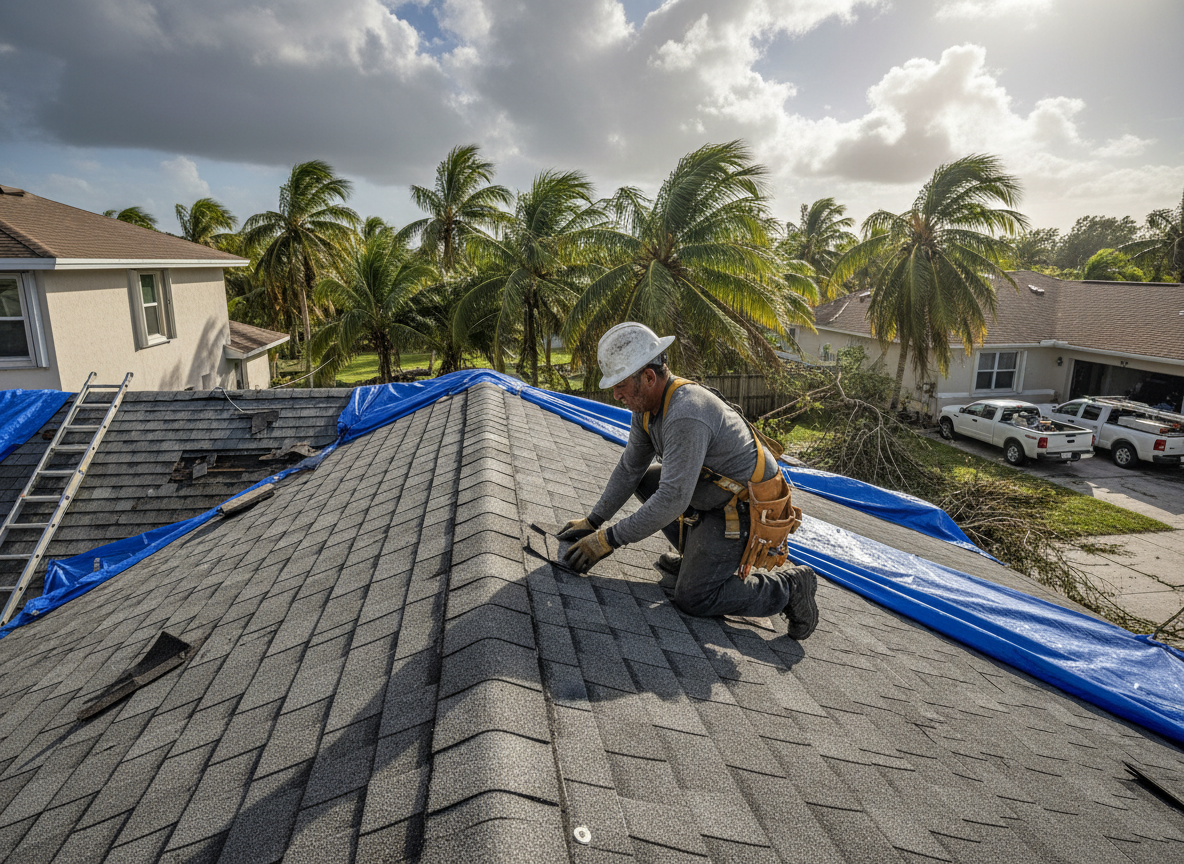
Cutler Bay roofs take repeated hits from tropical storms and hurricanes that drive water under tiles and through flashing long before leaks appear inside. Many homes built before the 2002 Florida Building Code updates still carry older underlayment that fails when wind lifts edges or when debris punctures the surface. BravikMend crews start every storm call by walking the entire roof, checking ridge vents, valley metal, and boot seals around vents that commonly separate after sustained 50-plus mph gusts common along South Dixie Highway corridors.
Tile roofs prevalent in Cutler Bay neighborhoods east of US 1 lose individual pieces during storms, exposing the felt or synthetic underlayment to UV and further rain. When that happens, crews replace only the damaged section while matching the existing profile and color so the repair does not stand out. Edge cases include impact from tree limbs on low-slope additions or carports where water pools against the house wall; these require new step flashing and cricket additions that meet current Miami-Dade wind-load requirements without a full re-roof.
After any named storm, inspectors look for hidden deck damage where water has wicked into the plywood along seams. BravikMend removes only the compromised sheets, installs new CDX or OSB with ring-shank nails at code spacing, then restores the underlayment and tiles above. Homeowners along the Old Cutler Road corridor often see leaks months later because initial repairs missed the secondary water path created by wind-driven rain; a full perimeter check prevents that callback.
Technician insight
In Cutler Bay the thing that catches most people out with storm damage roof repair is hidden deck rot along the south-facing eaves where wind-driven rain from the bay pushes water under the tile for weeks before it shows inside. Older homes near 20507 S Dixie Hwy often have single-layer felt that tears during the next gust even if the tiles look fine from the street.
Post-storm leak on Old Cutler Road
Homeowner noticed water stains after a tropical storm. Inspection found lifted tiles and torn underlayment along the south eave with rotted decking underneath. Crew replaced the compromised plywood, installed new synthetic underlayment, and reset matching tiles. No further leaks reported after the next heavy rain.
How it works
- 1
Initial Assessment
Technician arrives within hours, documents visible damage from the ground and roof, and notes any interior water stains.
- 2
Detailed Roof Walk
Full inspection of tiles, flashing, underlayment, and decking with photos for insurance documentation.
- 3
Targeted Repair
Replace damaged tiles or sections, restore underlayment and flashing to current Miami-Dade standards.
- 4
Final Walk and Documentation
Owner review of completed work, explanation of any remaining insurance steps, and 24/7 callback number left on site.
Pricing
Upfront written quotes after inspection; final price depends on extent of deck damage and tile availability.