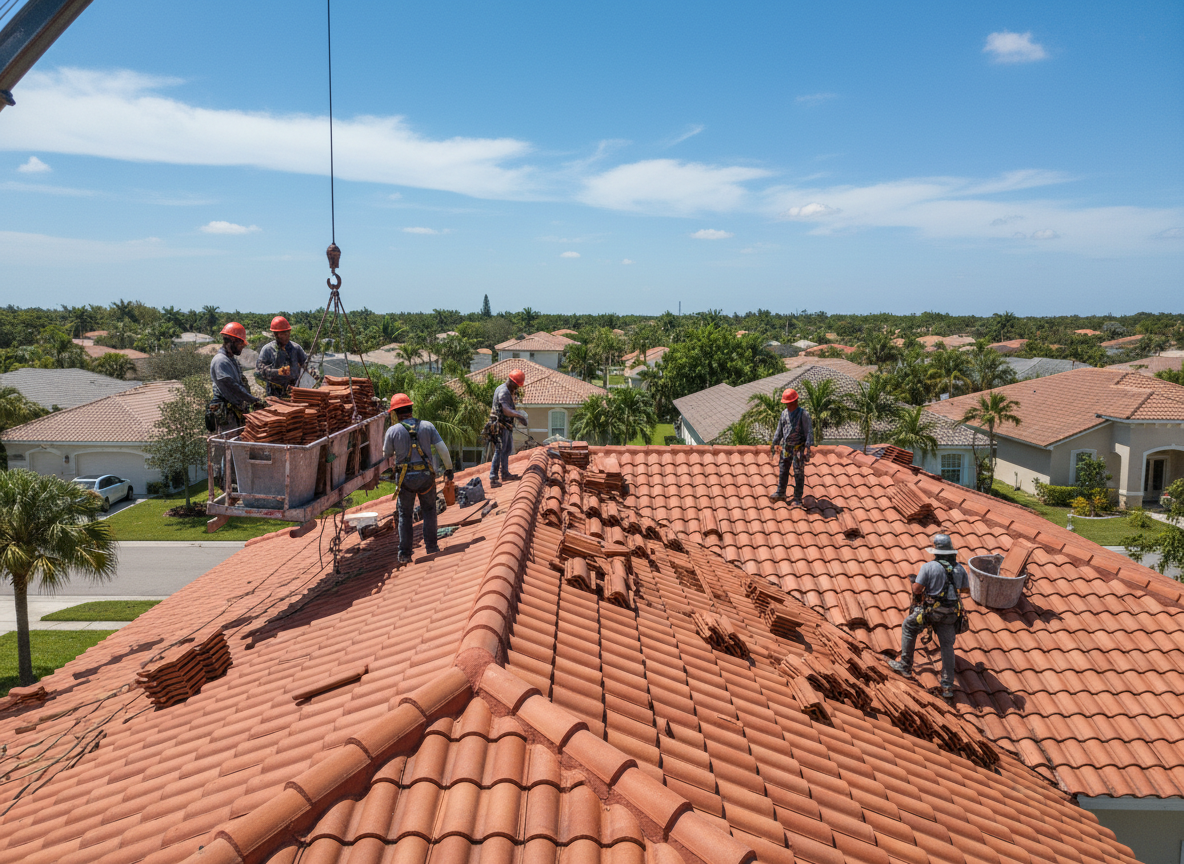
Tile roofs in Cutler Bay commonly use concrete or clay tiles installed over older homes from the 1980s and 1990s that sit on flat lots near canals. These roofs face constant UV exposure, high humidity, and salt air that corrodes metal flashings and fasteners faster than inland areas. Replacement starts with full deck inspection because many homes still have original plywood that has softened from repeated storm leaks. Proper underlayment must meet current Miami-Dade County high-velocity hurricane zone requirements, including self-adhered membranes at eaves and valleys.
Edge cases appear on homes with barrel tile profiles where ridge vents were added later without correct flashing, allowing wind-driven rain to enter during summer thunderstorms. Crews must also account for the weight of new tiles when older trusses show signs of sagging from prior roof layers left in place. Access can be tight on streets off Old Cutler Road where mature trees limit equipment staging. All work follows local permitting rules that require inspection at decking, underlayment, and final stages.
Homeowners often overlook the need to replace damaged battens and install new hurricane clips on every tile course. Skipping this step leaves the roof vulnerable during the June-to-November storm season when winds regularly exceed 100 mph in the Cutler Bay area. We remove all debris the same day and protect landscaping with ground tarps because crushed tile pieces can damage irrigation lines common in these neighborhoods.
Technician insight
In Cutler Bay, the thing that catches most people out with Tile roof replacement is the hidden rot on 1980s plywood decks along the canal streets south of 205th Street where salt air has already eaten through the original felt, so you end up doing more deck work than the homeowner expected once the tiles come off.
Tile Roof Replacement After Storm Damage
Homeowner noticed water stains in the attic after a summer thunderstorm. Inspection revealed cracked tiles and failed underlayment on a 1989 home off Franjo Road. We removed the old system, replaced damaged decking sections, and installed new code-compliant underlayment and tiles with full hurricane clips. The roof passed final inspection with no further leaks reported.
How it works
- 1
On-Site Assessment
Inspect tile condition, decking, and existing flashings at the Cutler Bay address to identify hidden damage from prior storms.
- 2
Permit and Material Staging
Pull required Miami-Dade permits and stage code-approved underlayment and tiles at 20507 S Dixie Hwy before work begins.
- 3
Tear-Off and Deck Repair
Remove old tiles and underlayment, repair any compromised plywood, and install new self-adhered membrane at all edges.
- 4
Tile Installation
Install new tiles with hurricane clips, replace all flashings, and seal penetrations to meet current wind-load standards.
- 5
Final Inspection and Cleanup
Schedule county inspection, remove all debris, and walk the roof with the homeowner to confirm performance.
Pricing
Upfront quotes provided after roof inspection; cost varies with home size, tile type, and deck repairs required.