2026-10-24 ·
Maintaining Tile Roofs In Humid Coastal Areas
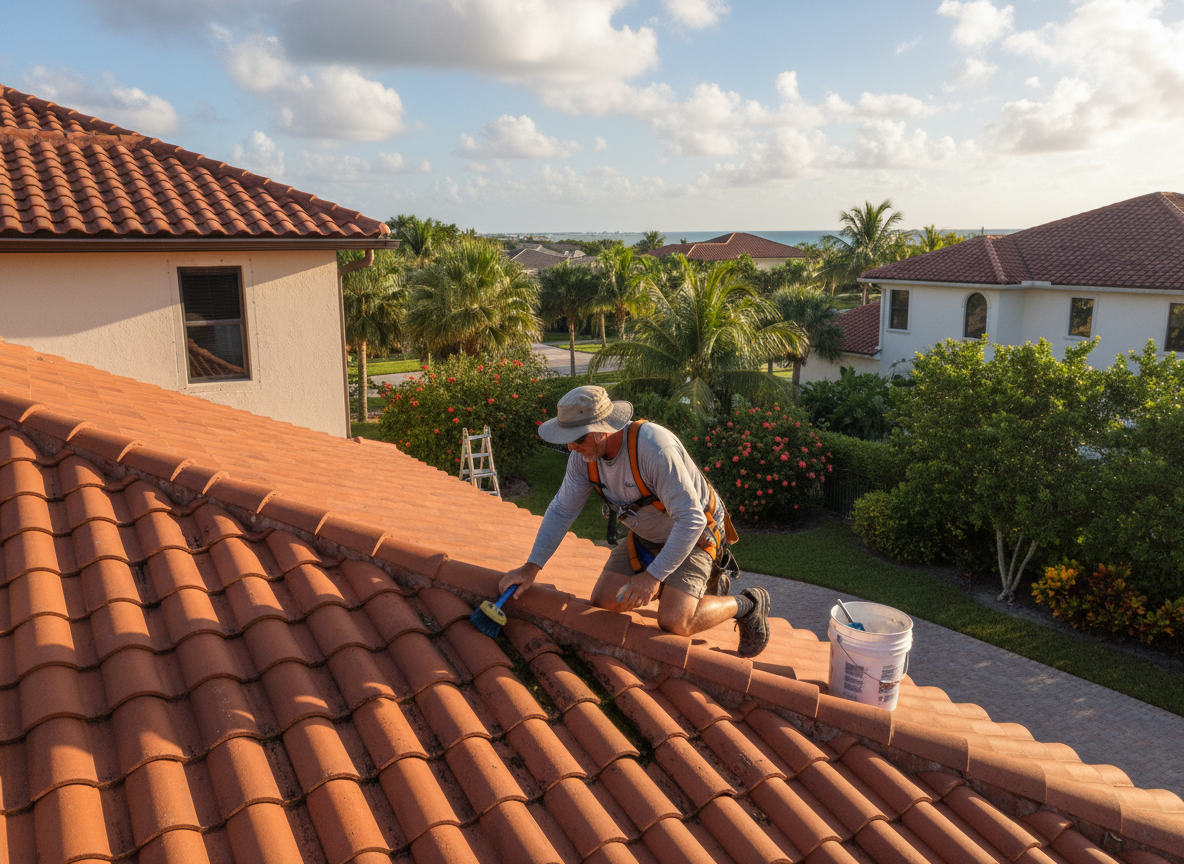
Tile roofs in humid coastal areas like Cutler Bay typically last 25–40 years with scheduled inspections every 6–12 months and prompt cleaning after storm season. Salt-laden air accelerates grout erosion and metal flashing corrosion while constant moisture encourages algae growth on barrel tiles common on 1980s–2000s homes in Cutler Ridge and West Perrine.
Salt Air and Humidity Effects on Tile Systems
Cutler Bay sits just west of Biscayne Bay, so onshore breezes carry salt spray that settles on concrete and clay tiles. Over time this causes efflorescence on the surface and breaks down the mortar beds between tiles. Homeowners in Kendall and Richmond Heights often notice white powdery deposits within three years of installation if no sealer is applied. High relative humidity above 80 percent for months at a time also keeps underlayment damp, shortening its effective lifespan to roughly 15–20 years. Regular rinsing with fresh water after major weather events removes salt before it embeds. Professional crews based at 20507 S Dixie Hwy perform these rinses using low-pressure equipment to avoid dislodging tiles.
Seasonal Inspection Schedule for Cutler Bay Homes
Schedule a full roof inspection services each spring before hurricane season and again in late fall. Focus on ridge tiles, valley flashings, and penetrations around plumbing vents that are common leak points after summer thunderstorms. In neighborhoods such as Leisure City and Naranja, wind-driven rain from afternoon storms can push water under cracked tiles within minutes. Inspectors look for cracked corners, displaced tiles, and rust on exposed screws. Document findings with photos so owners can track progression year over year. Early detection allows minor fixes instead of full tile roof replacement later.
Cleaning Practices to Control Algae and Mold
Algae and black mold thrive on north-facing slopes where shade and moisture linger. Use a 50/50 mix of water and oxygen bleach applied with a pump sprayer, then rinse thoroughly. Avoid high-pressure washing that can fracture tile edges or drive water under the underlayment. In Coconut Grove and Ojus, where tree cover is heavier, schedule cleaning twice yearly. Remove debris from gutters and scuppers at the same time to prevent backup that forces water under the first course of tiles. These steps keep the roof surface dry longer and reduce the frequency of roof repair calls.
Flashing and Fastener Maintenance
Metal flashings around chimneys, skylights, and wall intersections corrode fastest in salt air. Replace rusted step flashing with stainless steel or copper before leaks appear in the attic. Check screw heads on ridge caps annually; replace any that show rust streaks. In older Cutler Bay subdivisions, original galvanized flashings often need upgrade within 12–15 years. Proper sealing at these points stops water intrusion during the heavy rains that accompany tropical systems. Spotting roof leaks after summer thunderstorms becomes easier once flashings are maintained.
Knowing When Replacement Makes Sense
When more than 20 percent of tiles show cracks or the underlayment has reached 20 years, replacement usually costs less than repeated repairs. Factors such as storm frequency and prior wind damage influence the decision. South Florida replacement pricing varies with tile type and roof pitch; see what affects roof replacement costs in south Florida for current local ranges. BravikMend crews at 20507 S Dixie Hwy remain available 24/7 to assess conditions after high-wind events and discuss options with homeowners in surrounding communities.